

Our work at the sun temple of Nyuserra at Abu Ghurab has led to new amazing discoveries!!! See the announcement by the Egyptian Ministry of Tourism and Antiquities below…… many thanks to all our sponsors and partners as well as to all the mission members, the local authorities and our workers!!!
Here the English translation of the original text in Arabic available on the official FB page of the Ministry…… more to follow…… stay tuned !!
December 12, 2025
The remains of the Valley Temple of the Solar Complex of King Nyuserra have been uncovered in the Abusir archaeological area.
The Italian archaeological mission in the site of Abu Ghurab, archaeological area of Abusir, led by Dr. Massimiliano Nuzzolo and Dr. Rosanna Pirelli from the Universities of Turin and Naples L’Orientale, respectively, unearthed the remains of the Valley Temple of the Solar Complex of King Nyuserra from the Fifth Dynasty during ongoing excavations at the site.

Dr. Mohamed Ismail Khaled, Secretary-General of the Supreme Council of Antiquities, emphasized the importance of this discovery, explaining that this temple is one of only two known sun temples in ancient Egypt. He added that the mission has, for the first time, successfully uncovered more than half of the temple, revealing a massive structure exceeding 1,000 square meters in area, distinguished by its unique architectural plan, making it one of the largest and most prominent valley temples in the Memphis necropolis. He noted that the German Egyptologist Ludwig Borchardt had identified the temple’s location in 1901, but the high water table at the time prevented excavation.
Professor Mohamed Abdel-Badi, Head of the Egyptian Antiquities Sector at the Supreme Council of Antiquities, stated that the excavations revealed the temple entrance, covered by a thick layer of Nile silt approximately 1.20 meters high. The original entrance floor, a limestone column base, and the remains of a circular granite column, likely part of the main entrance portico, were also uncovered.
Fragments of the original stone casing of the walls of the corridor connecting the entrance gate and the ascending causeway were also unearthed, along with several architectural elements found in their original positions within the temple, including granite lintels and doorways.
Dr. Massimiliano Nuzzolo declared that during the previous excavation season, the mission discovered a complete, well-preserved quartzite gate, along with the remains of an internal staircase leading to the roof, in the northwestern part of the temple, suggesting the presence of a secondary entrance. He added that current excavations have also revealed a slope believed to have connected the temple to the Nile or one of its branches, and that initial indications confirm the building’s northward extension, following the architectural style of the Fifth Dynasty temple complexes, including the valley temple of the pyramid of King Sahura at Abusir. The mission also unearthed a remarkable collection of artifacts, including two wooden pieces of the ancient Egyptian game of Senet, similar to modern chess.
Dr. Rosanna Pirelli underlined the discovery of a massive stone lintel inscribed with hieroglyph inscriptions mentioning a calendar of religious ceremonies for the temple, as well as the name of King Nyuserra.
Fragments of inscribed blocks in white limestone were also found, along with large quantities of pottery dating from the late Old Kingdom to the early Middle Kingdom, with most belonging to the First Intermediate Period. Preliminary studies indicate that after its function as a royal place of worship ended, the temple was transformed into a small residential area inhabited by local people during the First Intermediate Period. This provides a new source of information for understanding the daily lives of the inhabitants of the Memphis region during this little-documented period of ancient Egyptian history.
The mission is preparing to continue its work in the coming seasons to explore further aspects of this important archaeological site and uncover new details that will greatly contribute to our understanding of the origins and development of sun temples in ancient Egypt.
Finally announced by the Egyptian Ministry of Tourism and Antiquities our latest discoveries in Abu Ghurab…… many thanks to all the mission members as well as to local authorities and workers !!!
Here the English translation of the original text in Arabic available on the official FB page of the Ministry…… more to follow soon…… stay tuned !!
“30 July 2022
The remains of a building, probably one of the four lost Sun Temples of the Fifth Dynasty kings, have been unearthed in Abusir.
The joint Italian-Polish archaeological mission working in the Sun Temple of King Niuserre at Abu Ghurab, north of Abusir, discovered the remains of a mudbrick building laying underneath the temple. The preliminary studies indicate that it might be one of the four lost temples of the Sun dating to the Fifth Dynasty and known from the historical sources. Dr Mustafa Waziri, Secretary-General of the Supreme Council of Antiquities, stated that the excavations will be completed at the site to reveal more about this building.
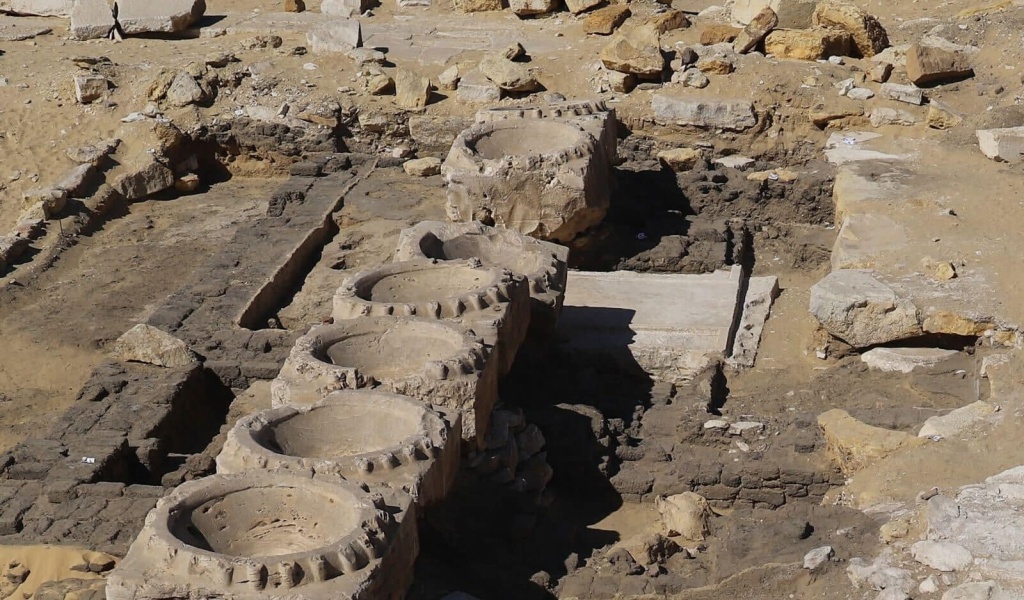
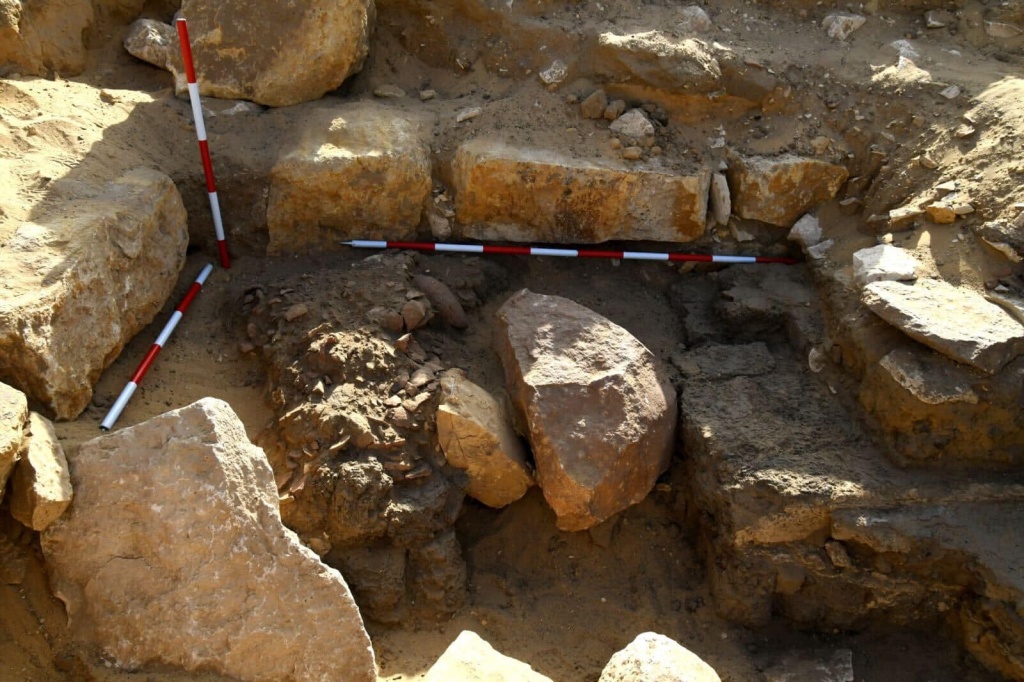
Dr Mustafa Waziri also said that the remains of the discovered building are accessed through a monumental entrance built of limestone, leading to an area used as storehouses, in the north, and to a wide courtyard to the west, where there is a mud paved floor and huge blocks of quartzite, some of which have smoothed faces and are embedded in the floor below the Sun Temple of king Niuserre.
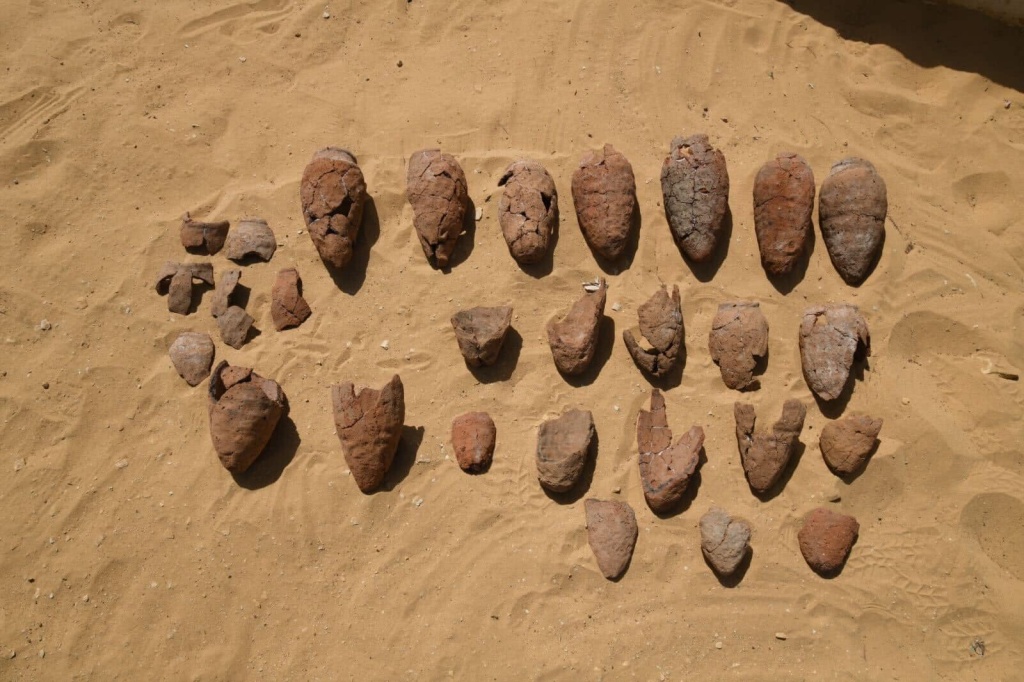
Dr Ayman Ashmawy, head of the Egyptian Antiquities Sector at the Supreme Council of Antiquities, said that the remains of the discovered building indicate that it was built of mudbricks, and that it was partially destroyed by Niuserre to build his own temple, pointing out that many pottery vessels were discovered at the site, which may have been used in foundation rituals. Among them particularly important are those discovered inside the Sun Temple of king Niuserre, in the northeastern corner, below the stone slabs of the foundations of the temple itself.
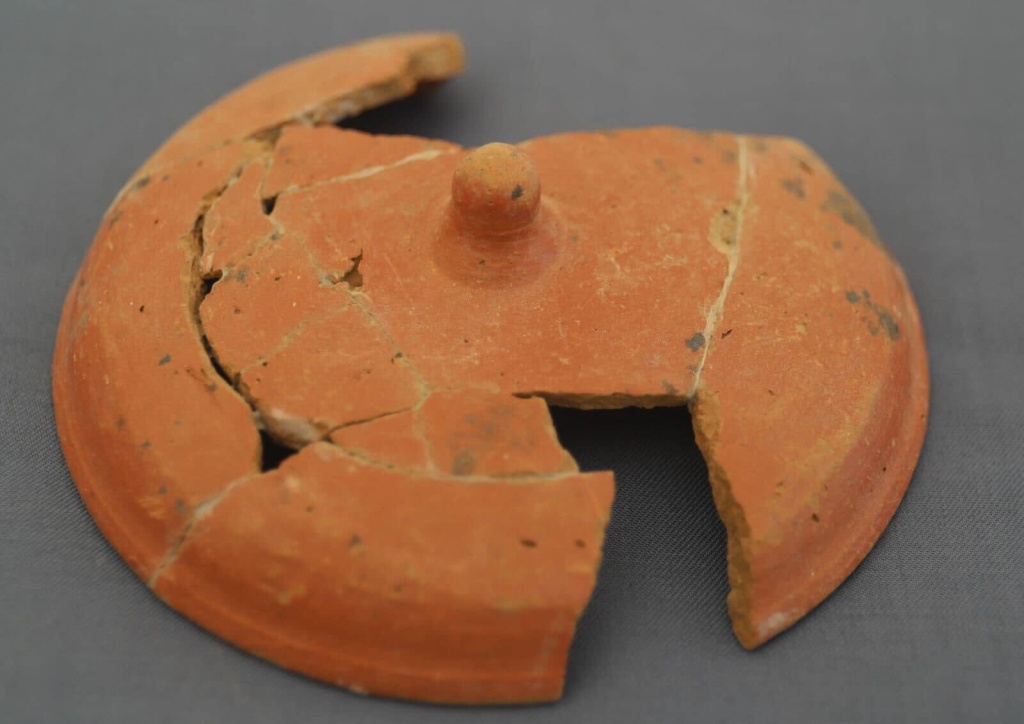
From his side Dr Mohamed Youssef, Director of Saqqara Antiquities Inspectorate, said that the foundation deposits were found at the level of the mudbrick wall of the ancient temple, and consisted mostly of beer-jars but also of Meidum bowls and some red slip ware pots.
Dr Rosanna Pirelli, head of the mission from the University of Naples L’Orientale, said that several fragments of clay seals bearing royal names were also found, including one with the name of the Fifth Dynasty King Shepseskare, about which we do not have much information, stressing that the new discoveries may indicate his presence and activities at the site. This may change our knowledge of the history of this king as well as of the Fifth Dynasty in general.
Dr Massimiliano Nuzzolo, head of the mission from the Polish Academy of Sciences in Warsaw, confirmed that the mission will complete its work soon, in the attempt to completely unearth the ancient temple, and unveil more secrets about this building.”